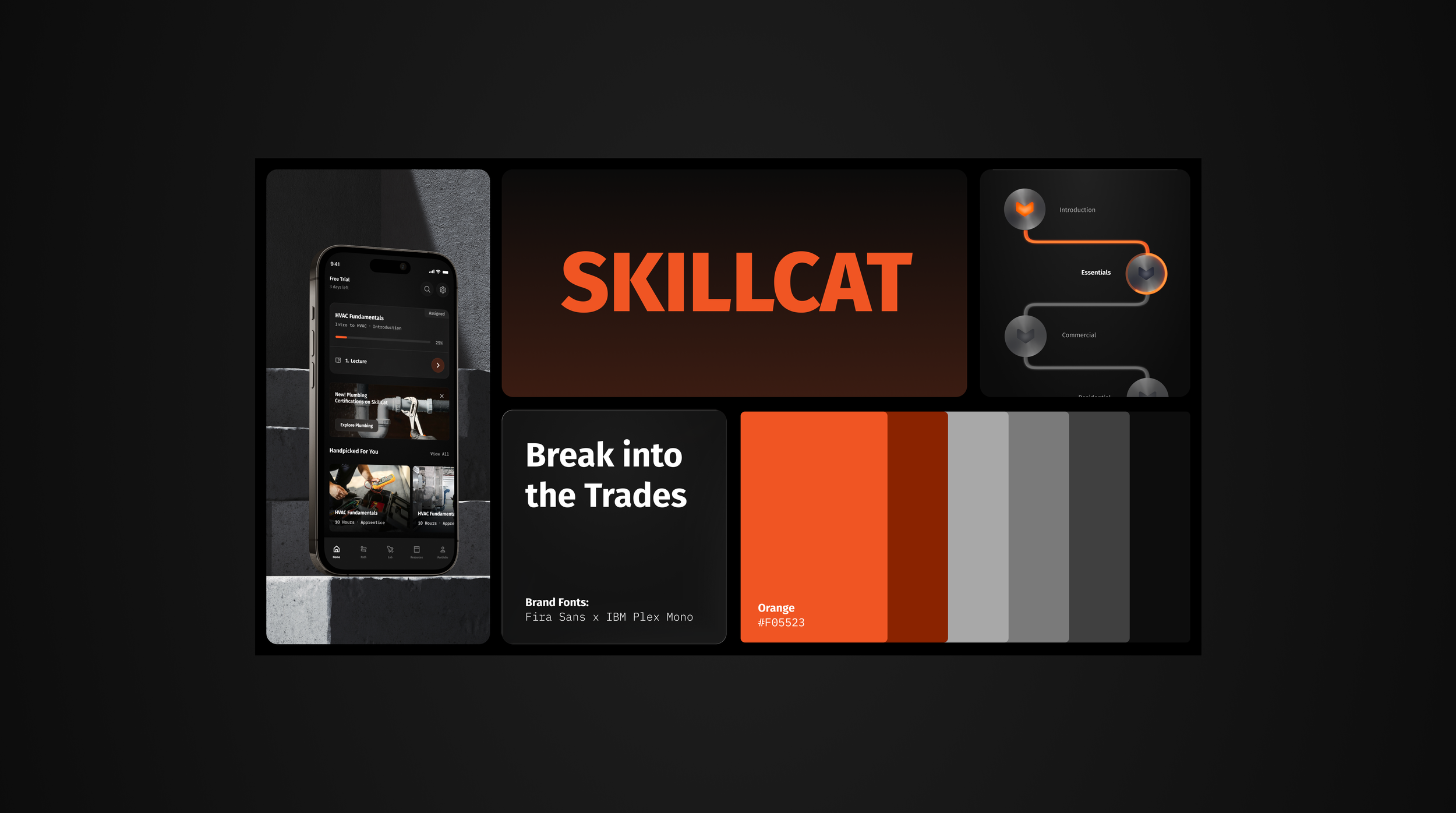
SkillCat
Turning a certification app into a career platform for the trades
ROLE
Lead Product Designer / Product Manager - B2C
Product Strategy · UX/UI · Design Systems · Prototyping
TIMELINE
11 Months (Launching 2027)
Background
SkillCat provides accredited training and certifications to 500K+ skilled trades workers across more than 300 courses and exams. But most learners were not coming simply to learn. They came with a specific outcome in mind: get certified, get hired, earn more, or advance in their trade.
The product had grown around a Moodle based course library rather than those goals. Learners were met with an overwhelming amount of content, little hierarchy, and few connections between completing a certification and what could come next.
Opportunity
EPA 608 was SkillCat’s biggest acquisition driver and its biggest dropoff point. Most learners came for the certification, but once they earned it, they often left despite a much larger library of training available.
The problem wasn’t more content. Many learners were new to the trades and didn’t know what skills or certifications would actually move their careers forward, while existing behavior showed that overly prescribed learning reduced engagement.
The opportunity was to turn a one time certification journey into continued career progression, giving learners clearer direction without taking away their freedom to explore.
Concept
I reimagined SkillCat around what learners were actually trying to accomplish beyond completing coursework: earning credentials, building skills, getting hired, and advancing in their trade.
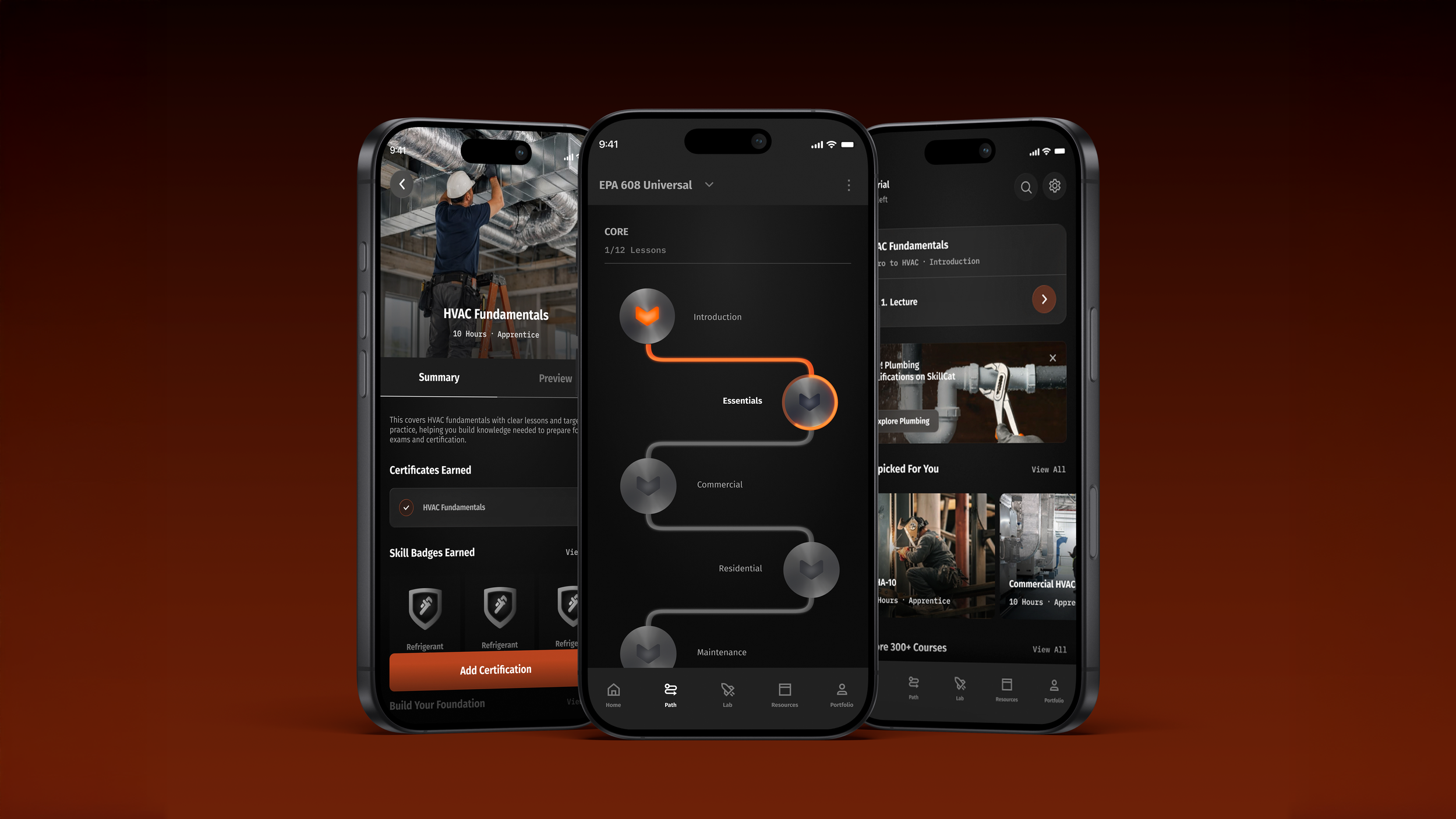
The new experience connects those goals across the learner journey. Onboarding establishes a more relevant starting point, Home brings greater hierarchy to learning and discovery, and Path connects individual courses and certifications into a longer term view of progress.
Throughout the experience, Guided Autonomy became a guiding principle: make the next step clear without making it mandatory.
Personalizing the Journey
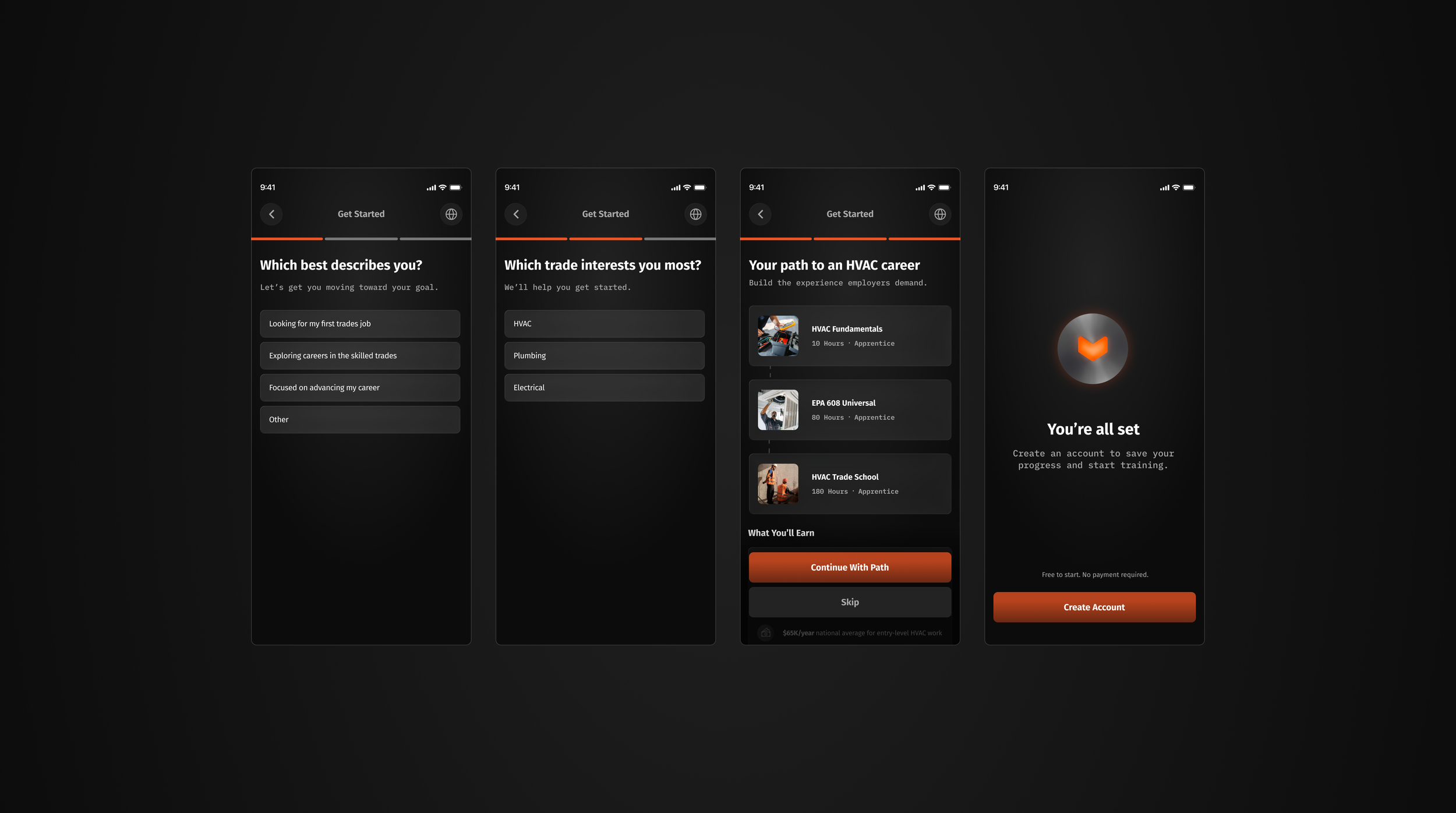
If SkillCat wanted learners to see it as more than a one time certification tool, it needed to become useful before they even knew what to take next. I moved onboarding before registration to lead with value and understand intent before asking for commitment, using goals and experience to shape a more relevant starting point.
That context carries into Home, balancing personalized guidance with the freedom to explore, while phone first signup better reflects how SkillCat’s predominantly mobile audience already behaved.
Rethinking the Learning Model
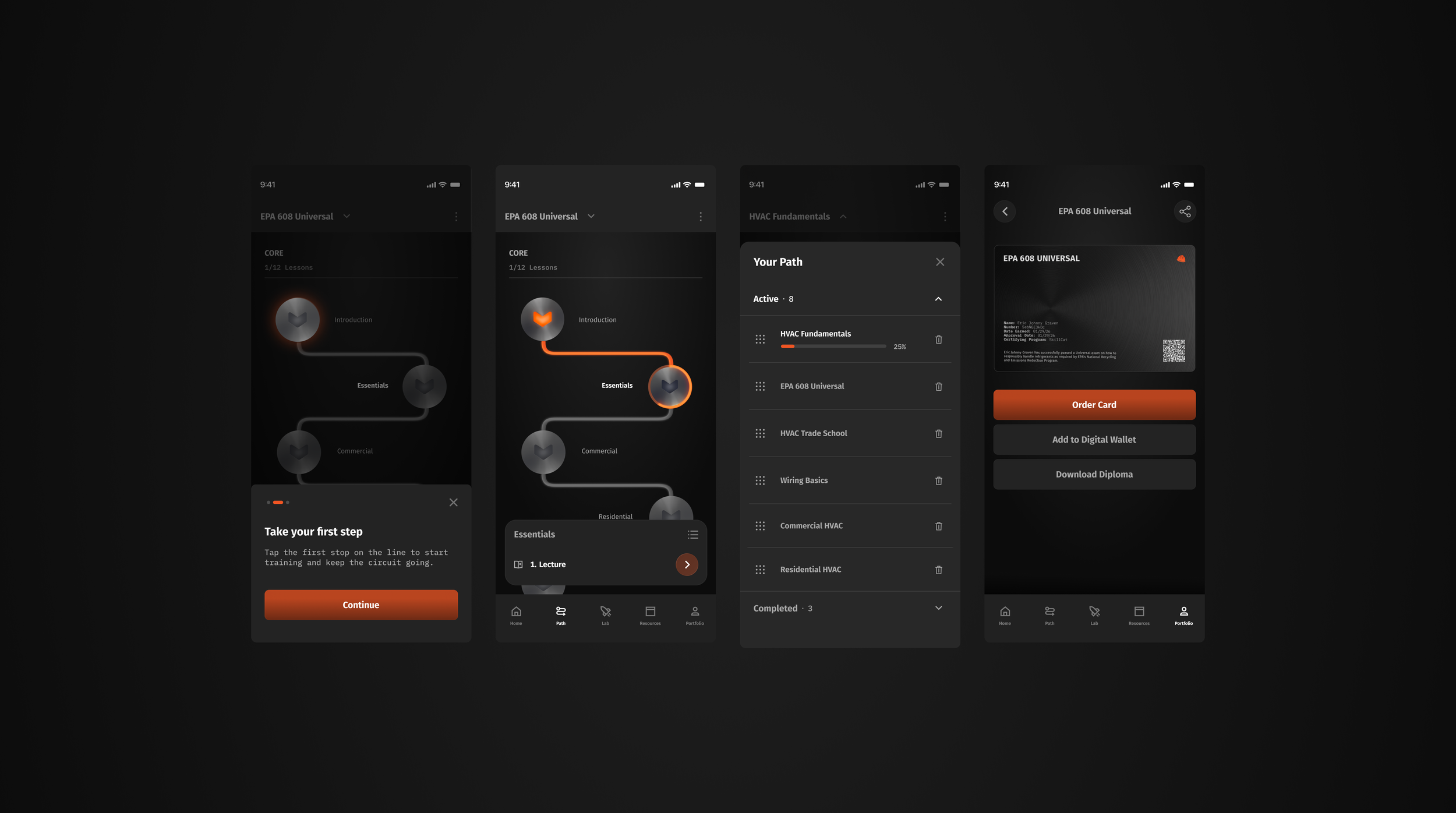
EPA 608 brought learners to SkillCat, but earning it often marked the end of their journey. Existing behavior showed learners were motivated by concrete outcomes and visible progress, often skipping content or jumping ahead to reach a credential. I redesigned the traditional LMS as a continuous skill tree, drawing from game based and neurodivergent friendly learning patterns to break larger career goals into visible milestones, rewards, and clear next actions.
The tree became an electrical circuit, making progression feel native to the trades while keeping the Path flexible enough to skip, reorder, or change direction. With no established usability testing practice, I advocated for the time and budget to validate the model, ultimately reaching 96.3% task success, and 8.4/10 understanding.
Supporting learners beyond a single certification also meant creating a product that could earn trust, stay coherent, and grow with them. I developed a visual language grounded in the physical world of the trades, replacing fragmented UI and artificial imagery with a more authentic and distinctive experience.
That language became a 90+ component system across mobile and desktop, unifying brand and product while creating a scalable foundation for new learning experiences, features, and trades.
Building a System for Growth